
The Everyday Survivor: How Bryan Hodukavich Redefines the Resident Evil Protagonist

For decades, the Resident Evil franchise has been synonymous with a specific breed of hero. Whether in Capcom’s foundational video games or Paul W.S. Anderson’s action-heavy cinematic adaptations, the names Leon S. Kennedy, Chris Redfield, Jill Valentine, and Alice evoke images of heavily armed, peak-physical tactical operatives. These are characters who look at a horde of bio-organic weapons and reach for a shotgun, executing flawless backflips and tactical reloads. However, Zach Cregger’s 2026 cinematic reboot of Resident Evil flips this established script entirely on its head. At the dead centre of this new vision of survival horror is Bryan Hodukavich, portrayed with palpable anxiety by Austin Abrams. Bryan is not a soldier, a police officer, or a seasoned survivalist. He is an ordinary, deeply flawed medical courier whose terrifying journey through Raccoon City fundamentally redefines what it means to be a Resident Evil protagonist.
To understand the radical shift Bryan represents, one must first examine who he is before the biological nightmare begins. Bryan is an employee of Lightfoot Medical Transport, a mundane, blue-collar courier service. When the audience meets him, he is not preparing for a combat mission; he is running away from his adult responsibilities. Faced with a tense, looming conversation with his pregnant girlfriend, Michelle, about their uncertain future, Bryan chooses avoidance. He accepts a last-minute, double-pay delivery route that requires him to transport a 1.87 kg package labeled “Biological Material” to Raccoon City General Hospital. This narrative choice immediately grounds Bryan in human flaw. He is not motivated by duty, justice, or heroism; he is motivated by desperation, financial pressure, and an all-too-human desire to escape personal conflict. By making the protagonist an average person carrying an ordinary package that happens to hold an extraordinary secret—a viral neutralizing agent—Cregger anchors the film’s high-concept horror in an accessible, relatable reality.
When Bryan arrives in Raccoon City, the contrast between his civilian background and the brewing apocalyptic chaos becomes the driving force of the film’s suspense. Unlike traditional franchise leads who possess an encyclopedic knowledge of weaponry and tactical positioning, Bryan’s immediate response to danger is panic. Austin Abrams delivers a masterclass in physical vulnerability, portraying a character whose hands shake, whose breathing is shallow, and whose immediate instinct is flight rather than fight. When forced into confrontation within the claustrophobic confines of Raccoon City’s tunnels, farms, and sewers, Bryan’s survival relies entirely on clumsy improvisation. He does not execute clean headshots; instead, he fires wildly out of terror, drops his ammunition, and relies on the environment to create distance between himself and the infected. Every encounter feels messy, dangerous, and exhausting, stripping away the power fantasy of modern action cinema to restore the genuine dread of early survival horror.
This grounded approach allows the film to explore the physical and psychological toll of a viral outbreak from an outsider’s perspective. Throughout his journey across the city, Bryan undergoes a grueling evolution. Without formal training, he is forced to adapt on the fly, learning how to handle firearms through sheer desperation. Yet, the film never allows him to magically transform into an action hero. He remains a civilian caught in a military-grade disaster. The narrative strips away his illusions of safety at every turn, turning familiar urban spaces into terrifying labyrinths. Cregger uses Bryan’s lack of expertise to amplify the audience’s anxiety; when Bryan doesn’t know how to clear a jammed pistol or navigate a darkened sewer line, the viewer shares his exact sense of helplessness.
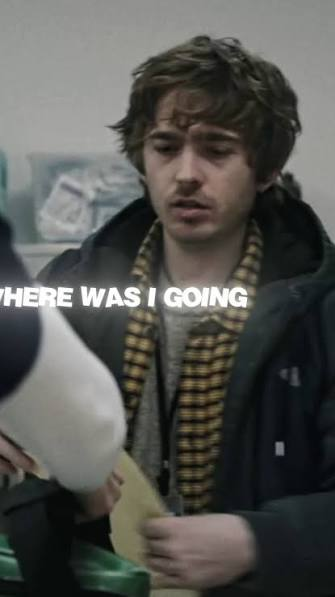
The emotional peak of Bryan’s narrative trajectory occurs when he finally arrives at Raccoon City General Hospital. Having navigated a gauntlet of horrors, he is brutally brought down to earth when he is bitten by an infected girl. In traditional Hollywood narratives, a protagonist’s infection is often a temporary hurdle, a ticking clock that invites a last-minute miracle. In Cregger’s darker, more compromised world, the bite carries an absolute, devastating weight. Despite knowing his time is limited, Bryan chooses to press forward, fighting his way up the hospital’s upper floors to deliver the 1.87 kg package. His motivation shifts from self-preservation to a frantic, selfless drive to ensure his arduous journey wasn’t for nothing. He successfully delivers the viral neutralizing agent, allowing the hospital’s remaining medical staff to synthesize a potential cure, but his victory is profoundly bitter.
The film’s final act delivers a tragic subversion of the hero’s journey. Before the synthesized cure can be administered to him, Bryan succumbs to the progressive biological mutation taking root in his body. The audience is forced to witness a heartbreaking transformation as the anxious courier is remade into a monstrous creature by the very virus he fought to contain. When the National Guard finally arrives to secure the facility, the fate of the infection and the city is left entirely ambiguous, overshadowed by the tragic loss of the man who risked everything to give humanity a fighting chance. Bryan’s sacrifice is not rewarded with a triumphant escape or a heroic reunion with Michelle; instead, he becomes another anonymous casualty of the Umbrella Corporation’s hubris.
Ultimately, Bryan Hodukavich represents a vital evolution for the Resident Evil cinematic brand. By stepping away from the invincible superheroes of the past, the 2026 reboot reminds audiences that the truest form of horror is experienced through the eyes of the ordinary. Bryan is memorable not because he was the strongest or the most skilled fighter in Raccoon City, but because he was a deeply anxious, ordinary man who, when faced with absolute terror, managed to find a scrap of heroism within himself before the darkness took him.
Who is Bryan Hodukavich?
Bryan Hodukavich is the main protagonist of the 2026 Resident Evil cinematic reboot, directed by Zach Cregger. He is a completely original character created specifically for this film.
Is Bryan Hodukavich in the Resident Evil video games?
No. Unlike iconic characters such as Leon S. Kennedy or Jill Valentine, Bryan does not exist in the Capcom video game universe. He was introduced to give the movie franchise a fresh, civilian perspective.
Who plays Bryan Hodukavich in the movie?
He is portrayed by American actor Austin Abrams, known for his roles in Euphoria, The Walking Dead, and Dash & Lily.
What is Bryan’s job before the outbreak?
Bryan works as an ordinary, anxious medical courier for a blue-collar company called Lightfoot Medical Transport.
What happens to Bryan at the end of the film?
After being bitten by an infected girl, Bryan successfully fights his way to the upper floors of the hospital to deliver the cure payload. However, before the medical staff can administer the cure to him, he succumbs to a progressive biological mutation and transforms into a monstrous creature.
read more: