
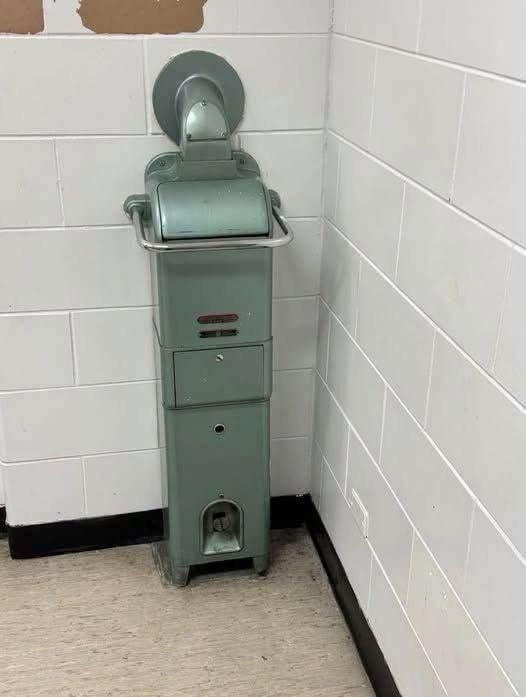
Forgotten Bathroom Relic: The Heavy Metal Trash Incinerator and the Era of Burning Our Garbage
Imagine stepping into your bathroom today, unwrapping a bar of soap, and instead of tossing the plastic wrapper into a small plastic bin, you open a heavy, cast-iron door built right into the wall. Inside, a pilot light glows. You drop the trash into the chute, turn a dial, and listen to the roar of flames turning your garbage into ash.
For decades in the mid-20th century, this wasn’t a futuristic sci-fi concept—it was a standard luxury in modern homes. Welcome to the era of the residential trash incinerator, a forgotten and bizarre chapter in domestic history where families quite literally burned away their problems right next to the bathroom sink.
What Was the Bathroom Incinerator?
During the 1950s and 1960s, suburban housing boomed, and with it came an obsession with ultimate convenience. Appliances were designed to eliminate chores entirely. Enter the indoor garbage incinerator.
Produced by companies like Majestic, Calcinator, and Bowser (under the catchy name “Smogmaster”), these appliances were heavy-metal beasts. While some models stood alone in the basement or kitchen looking like boxy washing machines, the most sought-after versions were built directly into the walls of kitchens or bathrooms.
Connected to the home’s chimney stack and hooked up to a natural gas line, these machines kept a constant fire lit. Whenever you had trash—whether it was paper, food scraps, or early forms of plastic—you threw it right in. The machine would cook the waste at extreme temperatures until nothing was left but a fine gray ash, which only had to be emptied once every few weeks.
Why Put an Incinerator in the Bathroom?
To a modern reader, putting a literal furnace inside a bathroom sounds like a recipe for a horror movie. But to the mid-century homeowner, it made perfect sense for a few practical (and cultural) reasons:
- The Rise of Disposable Products: The mid-1900s saw a massive spike in disposable hygiene products, tissues, and paper packaging. People wanted a way to get rid of personal bathroom waste immediately and discreetly without carrying it through the house.
- Odour Control: Trash bins in bathrooms can get unpleasant. The incinerator solved this by completely vaporizing the waste. The gas fire dried out the wet garbage and burned it up, theoretically venting all smells straight up the chimney.
- The “Space Age” Aesthetic: Having a sleek, chrome, or enamel dial built into your wall was a status symbol. It proved your home was on the cutting edge of modern engineering.
The Dark Side of Burning Your Trash
If these machines were so convenient, why don’t we use them anymore? As it turns out, having a miniature volcano inside your home came with massive drawbacks.
- The Smog and the Smell
While manufacturers promised “smokeless and odorless” operations, reality told a different story. If a homeowner tried to burn something too wet, or a big clump of early plastics, a thick, foul-smelling smoke would drift out of the chimney. On laundry days or humid afternoons, entire neighborhoods would be blanketed in a hazy, toxic smog that smelled like burning rubber and rotten food.
- Extreme Fire Hazards
Having a roaring fire burning behind a thin layer of drywall is inherently risky. Over time, creosote (a flammable tar-like substance) would build up inside the chimney flues. A single spark could trigger a massive chimney fire that could easily burn the whole house down. Furthermore, the metal doors of the units could get hot enough to blister skin, posing a major threat to curious children and pets.
- Environmental Awakening
By the late 1960s and early 1970s, the public began to realize the devastating effects of air pollution. Millions of homes burning garbage simultaneously released massive amounts of particulate matter, dioxins, and heavy metals into the atmosphere.
When the United States passed the Clean Air Act, local governments quickly banned residential burning. Almost overnight, the heavy-metal bathroom incinerator transformed from a luxury appliance into an environmental villain.
A Haunting Artifact in Older Homes
Today, these incinerators are nothing more than architectural ghosts. If you tour a house built between 1945 and 1970 that hasn’t been fully remodeled, you might still find one.
Often, modern homeowners mistake them for old laundry chutes or laundry stoves. They will find a small, heavy iron door embedded in the bathroom tile, usually sealed shut with decades of paint or completely welded closed for safety. If you open one, instead of a clean chute, you’ll see a dark, soot-stained chamber—a tiny portal back to a time when sustainability wasn’t even a word in our vocabulary.
The era of the indoor trash incinerator reminds us of how drastically our relationship with waste has changed. What was once viewed as the ultimate symbol of cleanliness and modern living is now recognized as a dangerous pollutant. So, the next time you take out your recycling or carry a small plastic bin to the curb, look at your bathroom wall and be thankful you don’t have to fire up a furnace just to get rid of a stray tissue!
Q: Were home incinerators safe to use?
A: By modern standards, not at all. While they were heavily insulated, the metal exterior doors could still become hot enough to cause severe burns. They also posed a massive fire hazard if flammable liquids were accidentally dropped inside, or if chimney maintenance was neglected, leading to hidden house fires.
Q: Did the bathroom incinerators smell bad when burning trash?
A: Yes, quite often. Although companies advertised them as “smokeless and odorless,” they relied heavily on proper chimney drafts. If a homeowner burned wet food waste, dense magazines, or early types of plastic, a foul-smelling, thick smoke would often back up into the bathroom or coat the neighborhood in a terrible stench.
Q: What happened to the items that couldn’t burn, like tin cans or glass jars?
A: Items like glass, tin, and aluminum obviously wouldn’t melt or vaporize at household temperatures. The intense heat would simply burn off any food residue, paper labels, or coatings, leaving behind sterilized, charred metal and cracked glass. Homeowners would then have to manually scoop these cooled remains out of the ash drawer and toss them into the regular trash.
🔥 Popular on RealityCover
 Warning: People vaccinated against COVID-19 may…
 Over 200 People Are Killed By The “World’s Deadliest Food” Every Year, But Almost 500 Million People Still Eat It
 Plane Passenger Stabbed by Child With a Fork During 14-Hour Flight
 If you grew up in the ’80s like I did, these things will bring back memories instantly




One thought on “Forgotten Bathroom Relic: The Heavy Metal Trash Incinerator and the Era of Burning Our Garbage”