
How to Stop Maggots From Taking Over Your Trash Bin
From “Spilled Rice” to Pure Panic: How to Handle a Maggot Infestation on Your Trash Can
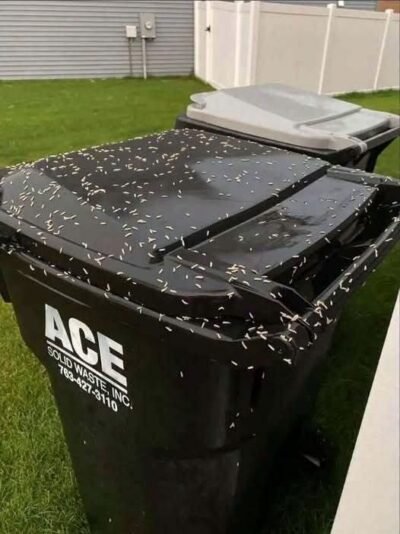
It is a crisp morning, and you walk outside to throw away the morning trash. From a distance, you notice what looks like a messy sprinkle of white rice scattered across the lid of your outdoor garbage bin. You step closer, wondering who could have possibly spilled leftovers all over the container—and then, the realization hits.
The “rice” is moving.
Finding your trash can covered in a writhing, crawling blanket of maggots is an immediate recipe for panic. It is stomach-turning, unsettling, and enough to make anyone want to abandon their garbage bins entirely. However, as gross as this sight is, it is a incredibly common household nuisance.
Understanding exactly what these pests are, why they chose your bin, and how to eliminate them can help you quickly reclaim your yard.
What Are They and Why Are They Here?
The tiny, cream-colored creatures crawling on your bin are maggots, which are the larval stage of the common housefly or blowfly.
Flies possess an incredibly sharp sense of smell and are naturally drawn to the odors of decomposing organic matter—particularly meat, fish, and rotting food scraps. When an adult fly finds a pungent food source, it can slip through the tiniest gap in a trash lid and lay hundreds of eggs. Within just 8 to 24 hours, those eggs hatch into hungry larvae. If the inside of the bin becomes too hot or overcrowded, or if they are preparing to pupate into adult flies, they will begin migrating outward, resulting in the skin-crawling sight of hundreds of maggots covering the exterior of your bin.
How to Eliminate a Maggot Infestation Immediately
If you are staring down a maggot-covered trash can right now, do not panic. You can eradicate them completely using simple household items:
- The Boiling Water Method: This is the fastest, cheapest, and most effective immediate solution. Boil a large pot or kettle of water and carefully pour it directly over the lid, handles, and inside of the bin. The extreme heat kills maggots instantly on contact.
- The Vinegar and Dawn Solution: If you want an extra layer of cleaning power, mix a solution of equal parts boiling water and white vinegar, or mix hot water with a generous amount of Dawn dish soap. Pour or spray this over the infested areas. Vinegar kills the larvae and immediately begins neutralizing the foul odors that attracted the flies in the first place.
- The Deep Rinse: After ensuring all the larvae are dead, bag up any remaining garbage tightly and move it out of the bin. Use a high-pressure garden hose to thoroughly spray down the interior and exterior of the can, flushing away all debris.
Keeping the Crawlers Away for Good
Once your bin is clean, the goal is to ensure flies never want to use it as a nursery again. Prevention relies entirely on controlling moisture and odor:
- Seal Food Scraps Securely: Never throw loose food waste, especially meat, cheese, or pet food, directly into your outdoor bin. Always double-bag highly perishable waste in smaller, tightly sealed bags before disposing of them.
- Deploy Baking Soda: Sprinkle a generous layer of baking soda at the bottom of your empty trash can. Baking soda absorbs excess moisture and traps odors, making the bin far less attractive to passing flies.
- Keep it Tight and Dry: Inspect your trash bins to ensure the lids close tightly without leaving gaps. Additionally, try to store your bins in a shaded area if possible; high heat inside a sealed plastic bin accelerates food rot, creating a beacon for pests.
Discovering a maggot infestation is a stressful morning surprise, but it is entirely temporary. With a little boiling water, a thorough hose-down, and smarter bagging habits, you can keep your outdoor bins clean, sanitary, and completely bug-free.
Are maggots dangerous to humans or pets?
No. Maggots themselves are not venomous and do not bite or sting. However, because they feed on rotting food and waste, they can carry harmful bacteria like Salmonella or E. coli. Avoid touching them with your bare hands, wash your hands thoroughly if you come into contact with them, and keep pets away from the area until it is cleaned.
How long do maggots live before turning into flies?
The maggot stage moves very quickly. They typically feed on waste for 3 to 5 days before crawling away to find a dry, dark place to turn into a pupa (a hard brown shell). After another 1 to 2 weeks in the pupal stage, they emerge as fully grown adult flies.
Can maggots crawl into my house from the outdoor bin?
It is unlikely unless your outdoor bin is kept right next to an open door, window, or doggy door. When maggots leave a trash can, they are looking for a quiet, dry spot nearby (like under a deck, in the grass, or in porch cracks) to transform into flies. Keeping your bins a few feet away from your home’s entryways will prevent them from wandering inside.
🔥 Popular on RealityCover
 Warning: People vaccinated against COVID-19 may…
 Over 200 People Are Killed By The “World’s Deadliest Food” Every Year, But Almost 500 Million People Still Eat It
 Plane Passenger Stabbed by Child With a Fork During 14-Hour Flight
 If you grew up in the ’80s like I did, these things will bring back memories instantly





One thought on “How to Stop Maggots From Taking Over Your Trash Bin”