
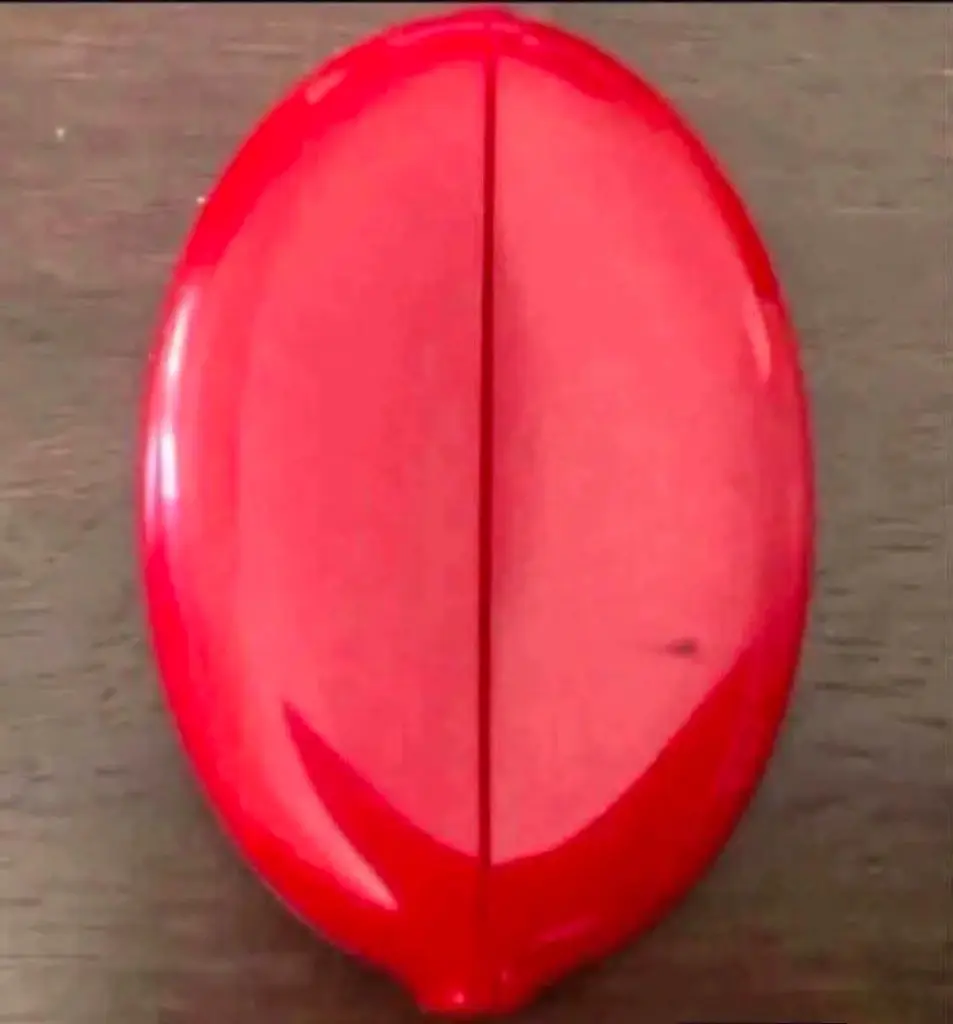
Unlocking the Mystery Object: The Classic Rubber Squeeze Coin Purse
For many who grew up in the mid-to-late twentieth century, a single sensory trigger can instantly unlock a flood of childhood memories: the distinct scent of flexible vinyl, a bright pop of primary color, and the satisfying mechanical “snap” of a small oval object opening under the pressure of a thumb and forefinger. On modern social media feeds, images of this curious object frequently circulate as viral guessing games. Captions tease younger generations with prompts like “People keep guessing, but no one gets it right. Do you know what this is?” For those of a certain vintage, however, there is no mystery at all. This is the classic rubber squeeze coin purse—an ingenious piece of mid-century industrial design that seamlessly blended utility, tactile satisfaction, and marketing brilliance.
Historically known by its official brand names like the Quikoin or Quikey, the oval squeeze purse remains one of the most recognizable yet unsung utilitarian staples of twentieth-century life. Though it might appear deceptively simple, the story behind this humble pocket companion reveals a fascinating intersection of material science, economic history, and cultural nostalgia.
The Genesis of an Everyday Icon
To understand the rise of the rubber squeeze coin purse, one must look to the mid-twentieth century, an era dominated by cash, vending machines, payphones, and toll booths. Before the ubiquity of credit cards and digital wallets, carrying loose change was an unavoidable daily necessity. Standard leather or fabric coin purses often featured complex metal “kiss-lock” clasps or zippers, which required two hands to operate and frequently tore through pockets over time.
Enter the Quikey Manufacturing Company of Akron, Ohio. Founded in the heart of America’s rubber and plastics manufacturing capital, the company revolutionized how people managed their change. They introduced a single-piece, molded flexible PVC pouch that traded complex mechanical fasteners for pure physics. By molding a hollow oval shape with a precise longitudinal slit across one face, the designers created a self-closing vessel. When left alone, the material’s natural elasticity held the slit firmly shut, safely trapping loose change inside. But when a user applied pressure to the short edges of the oval, the physics of the flexible material forced the slit to flex wide open into a gaping mouth, exposing the coins within. It could be operated effortlessly with just one hand, allowing drivers to quickly pay tolls or commuters to efficiently drop exact change into a turnstile.
A Masterclass in Promotional Marketing
While the functional design of the squeeze purse was undeniable, its explosion into global ubiquity was driven by a brilliant business model: promotional advertising. Because the flat back of the purse offered an ideal canvas for screen-printed graphics, businesses quickly realized that these little plastic objects were the perfect promotional giveaways.
For decades, local institutions—ranging from community banks and credit unions to hardware stores, gas stations, and insurance agencies—distributed custom-branded squeeze coin purses to their clients. It was a marketing strategy that guaranteed high visibility. Every time a customer reached into their pocket to buy a newspaper, grab a soda from a machine, or feed a parking meter, they were staring directly at the logo of their local auto mechanic or hometown bank. Because the vinyl material was virtually indestructible, these promotional gifts survived for years, moving from pockets to glove compartments, and eventually into dresser drawers, quietly cementing brand loyalty over generations.
The Playful Physics of Childhood Nostalgia
While adults viewed the squeeze purse through the lens of pure utility, children experienced it as something entirely different: a toy. The tactile nature of the object made it an irresistible plaything. Kids quickly discovered that squeezing the empty pouch at various speeds and pressures could replicate funny noises. In the late twentieth century, children frequently used them to mimic the distinct “waka-waka” sounds of Pac-Man, or squeezed them rapidly to make the purse “talk” in high-pitched, comical voices.
For a child, receiving a squeeze coin purse from a parent or grandparent was a rite of passage. It was often handed down with a few shiny quarters or dimes inside, serving as a first introduction to financial literacy. The purse felt grown-up, yet its bright colors and bouncy texture retained a sense of youthful playfulness. It became a staple of childhood allowance days, trips to the local candy shop, and Halloween trick-or-treat bags.
The Modern Resurgence: From Pocket to Collectible
As the world shifted toward a cashless economy, the practical need for a dedicated coin carrier naturally waned. Credit cards took over in the 1990s, and by the 2010s, smartphones began replacing physical wallets entirely. For a period, it seemed the humble rubber squeeze purse would be permanently relegated to the dustbin of history.
However, the classic design refused to disappear. In recent years, the Quikoin has experienced a remarkable cultural resurgence, fueled largely by the booming market for retro Americana and vintage aesthetic trends. According to industry manufacturers, millions of these purses are still produced and distributed annually, finding fresh audiences among collectors, vintage enthusiasts, and independent fashion brands.
Today, online marketplaces like Etsy
Unlocking the Mystery
Ultimately, the enduring legacy of the rubber squeeze coin purse lies in its ability to bridge the gap between design and emotion. It stands as a testament to an era when even the most affordable, mass-produced items were engineered to last a lifetime. By unlocking the mystery of this curious plastic oval, we uncover more than just a clever mechanism for holding change; we pull back the curtain on a shared cultural shorthand that continues to evoke warmth, simplicity, and a touch of mid-century magic.
What is a rubber squeeze coin purse called?
The rubber squeeze coin purse is most famously known by its official, trademarked brand names: Quikoin or Quikey. Because it was widely distributed as a promotional giveaway, it is also frequently referred to as an oval squeeze purse, vintage plastic coin pouch, or simply a squeeze pouch.
How does a rubber squeeze coin purse work?
The pouch relies entirely on the physics of flexible vinyl material. It is molded as a hollow oval with a single longitudinal slit across the front. When you apply pressure to the short edges of the oval, the natural elasticity forces the slit to flex wide open into a mouth. When pressure is released, the material snaps back to its flat, tightly sealed shape.
Who invented the Quikoin squeeze purse?
The original Quikoin was created and manufactured by the Quikey Manufacturing Company in Akron, Ohio. Founded in the mid-twentieth century, the company capitalized on Akron’s status as the rubber manufacturing capital of the world to mass-produce these durable, single-piece flexible PVC pouches.
READ MORE ARTICLES:
🔥 Popular on RealityCover
 Warning: People vaccinated against COVID-19 may…
 Plane Passenger Stabbed by Child With a Fork During 14-Hour Flight
 Over 200 People Are Killed By The “World’s Deadliest Food” Every Year, But Almost 500 Million People Still Eat It
 If you grew up in the ’80s like I did, these things will bring back memories instantly