
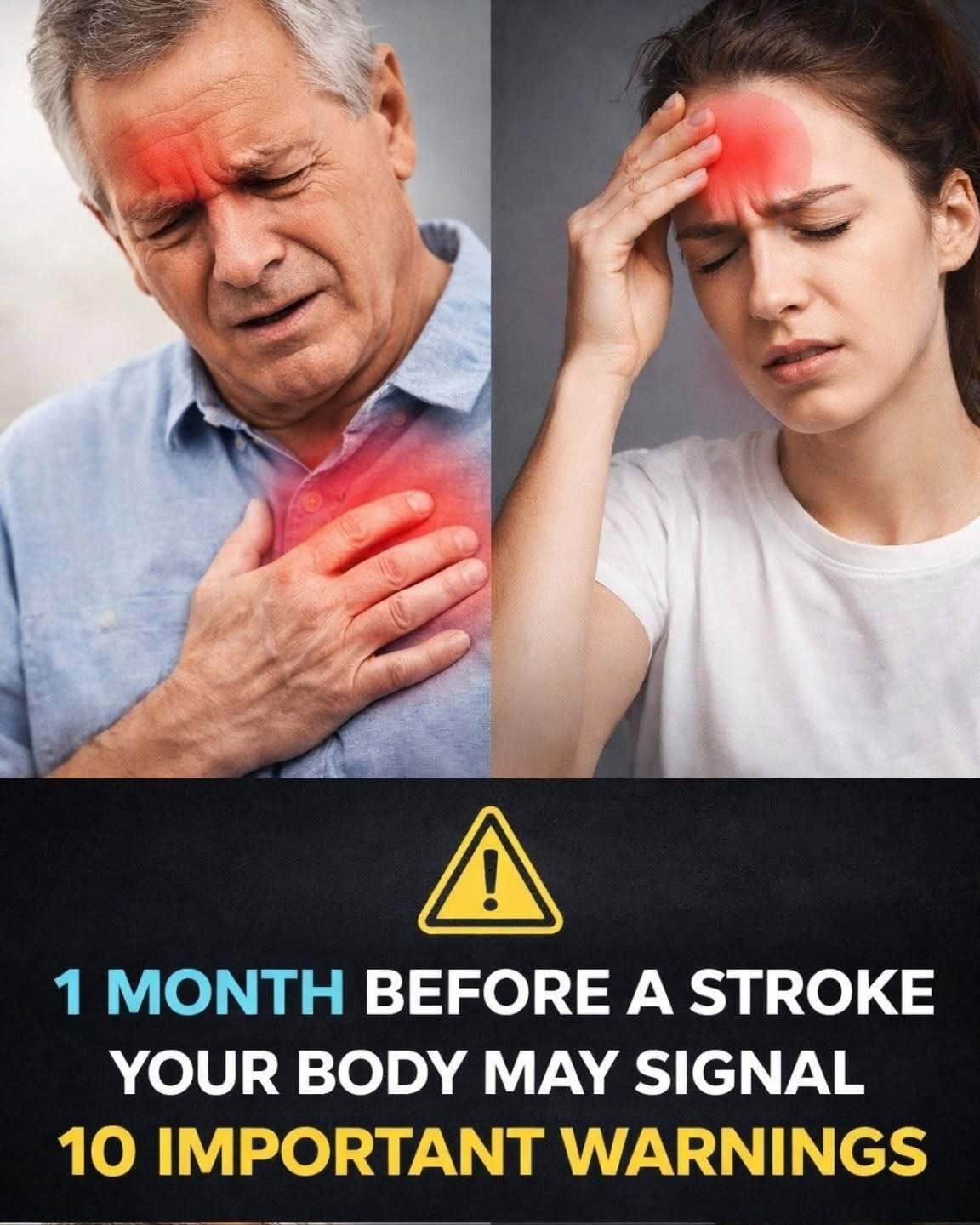
Your Body May Warn You Weeks Before a Stroke: 10 Signs You Should Never Ignore
The most important warning signs usually begin suddenly. They include weakness or numbness of the face, arm, or leg—especially on one side—difficulty speaking or understanding speech, vision changes, loss of balance or coordination, dizziness, and a severe unexplained headache. The B.E. F.A.S.T. method helps people remember the major signs: Balance loss, Eye changes, Face drooping, Arm weakness, Speech difficulty, and Time to call emergency services.
Even when symptoms disappear quickly, they still require urgent medical evaluation. A TIA can involve temporary weakness, numbness, vision problems, speech difficulties, dizziness, or loss of coordination. Stroke risk is also higher in people with factors such as high blood pressure, diabetes, smoking, high cholesterol, heart disease, or atrial fibrillation. Identifying and treating these conditions can significantly reduce the risk of a future stroke.
Reducing stroke risk involves controlling blood pressure and blood sugar, avoiding smoking, staying physically active, maintaining a healthy weight, eating a balanced diet, and following prescribed treatment for cardiovascular conditions. Most importantly, anyone who suddenly develops stroke symptoms should seek emergency medical help immediately—even if the symptoms begin improving—because every minute matters when brain tissue is losing blood and oxygen.
🔥 Popular on RealityCover
 Plane Passenger Stabbed by Child With a Fork During 14-Hour Flight
 If you grew up in the ’80s like I did, these things will bring back memories instantly
 Over 200 People Are Killed By The “World’s Deadliest Food” Every Year, But Almost 500 Million People Still Eat It
 Finding a Snake in Your House? Here’s What to Do (And Why You Shouldn’t Panic)