7 Common crock pot Mistakes That Can Make Your Food Toxic
The slow cooker is a beloved staple of the modern kitchen. Celebrated for its “set-it-and-forget-it” convenience, it transforms tough cuts of meat, hearty stews, and savory soups into tender meals with minimal effort. However, this convenience relies heavily on a delicate balance of time and temperature. Because slow cookers operate at lower temperatures than standard ovens or stovetops, minor missteps can quickly compromise food safety.
If handled incorrectly, your slow cooker can trap food in the bacterial “danger zone” or fail to neutralize natural plant toxins. To ensure your low-effort meals remain completely safe to consume, avoid these seven critical slow-cooking mistakes.
1. Placing Frozen Meat Directly into the Crockpot
One of the most frequent slow cooker mistakes is transferring frozen chicken breasts, beef roasts, or pork shoulders straight from the freezer into the ceramic pot.
- The Risk: Rapid proliferation of foodborne pathogens like Salmonella and E. coli.
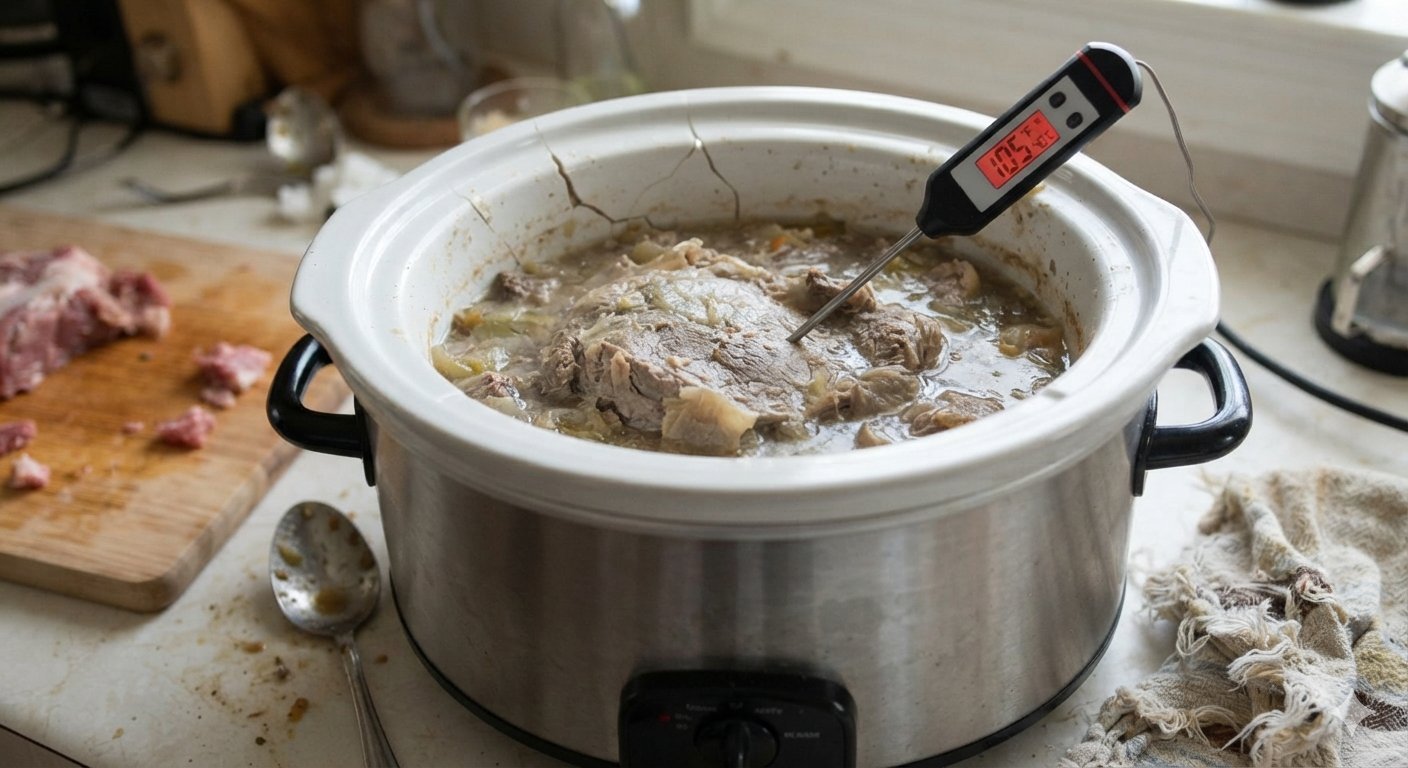
- The Science: Slow cookers heat up gradually. When you introduce a solid, frozen block of meat, the appliance spends hours fighting against the sub-zero core temperature. According to the United States Department of Agriculture (USDA), bacteria thrive and multiply rapidly in the “temperature danger zone” between 40°F and 140°F (4°C to 60°C). A frozen roast will sit in this hazardous temperature window for far too long before its core reaches a safe internal target.
- The Prevention: Always thaw meat completely in the refrigerator before adding it to your slow cooker. If you are short on time, use a microwave’s defrost setting or submerge the vacuum-sealed meat in cold water, replacing the water every 30 minutes.
2. Cooking Raw Dried Beans Without Pre-Boiling
Many home cooks enjoy making homemade chili or bean soups from scratch, but throwing raw, dried beans straight into a slow cooker can result in acute physical distress.
- The Risk: Phytohaemagglutinin (lectin) poisoning.
- The Science: Certain raw legumes, particularly red kidney beans and cannellini beans, contain high concentrations of a natural plant protein called phytohaemagglutinin, or kidney bean lectin. To destroy this toxin, the food must reach a sustained rolling boil of 212°F (100°C). Because slow cookers cook gently at lower temperatures, they often fail to degrade the lectin. In fact, cooking raw kidney beans at low heat can increase their toxicity up to fivefold, triggering severe nausea, vomiting, and abdominal pain within hours of consumption.
- The Prevention: Soak dried beans in water for at least 12 hours, drain and rinse them thoroughly, and then boil them vigorously on a traditional stovetop for a minimum of 10 minutes before transferring them to your slow cooker. Alternatively, buy canned beans, which are already pre-cooked and safe to use immediately.
3. Treating the Slow Cooker Like a Reheating Appliance
When looking at a pot of leftover stew from the night before, it is tempting to place the ceramic insert back into the heating element to warm it up for lunch.
- The Risk: Extensive bacterial multiplication in pre-cooked food.
- The Science: Slow cookers are designed strictly to cook food slowly or keep already-hot food warm; they lack the wattage required to reheat chilled food rapidly. Placing cold leftovers into a slow cooker means the food will slowly lukewarm over several hours. This extended exposure to mild heat acts as an incubator for any residual bacteria that may have settled on the food during storage.
- The Prevention: Always reheat leftovers on the stovetop, in an oven, or in a microwave until they reach a safe internal temperature of 165°F (74°C). Once the food is piping hot, you can safely transfer it to a pre-heated slow cooker to maintain its temperature for serving.
4. Packing the Insert to the Brim
It can be tempting to maximize a slow cooker’s capacity when meal prepping or cooking for a large gathering by filling it right to the top edge.
- The Risk: Cold pockets and unevenly cooked ingredients.
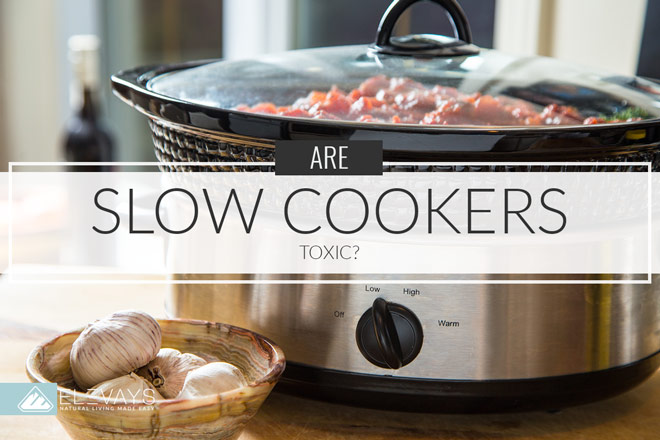
- The Science: Slow cookers rely on the even distribution of heat generated from the base and sides of the appliance, which is then trapped by the steam under the lid. Overfilling prevents this heat from circulating uniformly throughout the ingredients. As a result, sections near the top or center can remain undercooked, leaving raw meat at temperatures that encourage bacterial growth rather than destruction.
- The Prevention: To guarantee even heat distribution, always fill your slow cooker between one-half and two-thirds full. If you routinely have too much food, consider upgrading to a larger appliance or dividing the recipe into separate batches.
5. Overextending the “Warm” Setting
Modern slow cookers frequently feature an automatic “Warm” mode that activates immediately after the primary cooking cycle finishes. While highly convenient, this setting is not intended for long-term food preservation.
- The Risk: Bacterial resurgence as temperatures dip.
- The Science: The “Warm” setting is engineered to keep food at a stable serving temperature, typically between 145°F and 165°F. However, if the lid is opened repeatedly or if the appliance struggles to maintain its output, the internal temperature can drop below 140°F (60°C). Leaving food at this borderline temperature for many hours gives dormant bacterial spores an opportunity to wake up and multiply.
- The Prevention: Limit the use of the “Warm” setting to a maximum of two hours. After two hours, spoon the food into shallow, airtight containers and place them directly into the refrigerator to cool quickly.
6. Lids Off: Habitual Peeking and Stirring
It is natural to want to check on the progress of a meal, but lifting the lid of a slow cooker does more than just let out an appetizing aroma.
- The Risk: Stalling the cooking time and undercooking meat.
- The Science: Slow cookers function by trapping moisture and building up a pressurized envelope of steam under the glass lid. Every single time you lift that lid, the accumulated steam escapes, causing the internal temperature of the pot to drop by 10 to 20 degrees. It takes the appliance roughly 15 to 30 minutes to recover that lost heat. Frequent peeking throughout an 8-hour cycle can lengthen the required cooking time by hours, leaving your food undercooked and unsafe when the timer alerts you that it is finished.
- The Prevention: Resist the urge to peek. Trust the slow-cooking process and leave the lid securely sealed. Only remove it during the final 30 to 60 minutes of cooking if the recipe explicitly requires you to stir, add liquid, or insert a meat thermometer.
7. Adding Dairy Products in the Early Stages
Recipes that call for milk, heavy cream, sour cream, cream cheese, or shredded cheese require precise timing to avoid unappetizing—and potentially unsafe—results.
- The Risk: Curdling, separation, and accelerated spoilage.
- The Science: When dairy products are subjected to sustained low heat over several hours, the proteins denature, causing the liquid to curdle and separate into clumps of whey and curd. While curdled milk isn’t always immediately toxic, the broken emulsion degrades the dish’s texture and creates an unappeetizing environment where dairy fats and proteins can sour or spoil if temperatures fluctuate even slightly.
- The Prevention: Keep dairy out of the slow cooker for the majority of the cooking cycle. Instead, stir in your cheeses, creams, or milks during the last 15 to 30 minutes of cooking. This provides plenty of time for the dairy to melt, incorporate, and heat through without breaking down.
Slow Cooker Best Practices Summary
To keep these safety guidelines top of mind, refer to this quick reference guide for your next meal:
| Mistake to Avoid | The Safe Practice |
|---|---|
| Cooking frozen meat | Thaw completely in the fridge first |
| Raw dried kidney beans | Boil for 10 minutes on the stove before slow cooking |
| Reheating leftovers | Use a microwave or stove to reach 165°F |
| Filling to the top | Fill only 1/2 to 2/3 full |
| Leaving on “Warm” all day | Maximize “Warm” setting to 2 hours |
| Constant lid lifting | Keep the lid on to maintain consistent heat |
| Early dairy addition | Stir in dairy during the last 15–30 minutes |
If you want to ensure your next slow cooker meal turns out safely, let me know:
- What specific recipe or type of meat you are planning to cook?
- Whether your ingredients are fresh, frozen, or canned?
I can help you adjust the preparation steps and cooking times to keep your dinner perfectly safe.
Is it safe to leave a slow cooker on low while I am away at work for 8 to 10 hours?
Yes, it is perfectly safe, provided your slow cooker is placed on a flat, heat-safe surface (like a countertop away from walls) and is filled correctly (one-half to two-thirds full). Modern slow cookers are designed to operate unattended for long periods. If your recipe calls for 6 hours of cooking but you will be gone for 9 hours, it is highly recommended to use a programmable slow cooker that automatically switches to the “Warm” setting after the cooking time ends. Just ensure you return and refrigerate the food within 2 hours of it switching to the warm setting.
Can I use a meat thermometer to check if my crockpot meal is safe?
Yes, using a food thermometer is the best way to verify safety. You cannot always judge whether meat is safely cooked just by looking at its color or texture. Before serving, insert a digital food thermometer into the thickest part of the meat (making sure it does not touch a bone). Poultry should reach an internal temperature of 165°F (74°C), ground meats should reach 160°F (71°C), and whole cuts of beef, pork, or lamb should reach at least 145°F (63°C).
If I prep my slow cooker ingredients in the ceramic pot the night before, can I store it in the fridge and plug it in the next morning?
No, this is highly discouraged. Storing the heavy ceramic insert in the refrigerator overnight causes the ceramic itself to become completely chilled. When you plug it into the heating element the next morning, the appliance has to waste a significant amount of time warming up the cold ceramic before it even begins heating the food. This delays the cooking process and keeps your raw ingredients in the bacterial “danger zone” for too long. Instead, prep your ingredients in a separate airtight container or ziplock bag in the fridge, then dump them into the room-temperature ceramic insert right before you turn the machine on.
Read more:
🔥 Popular on RealityCover
 Warning: People vaccinated against COVID-19 may…
 Over 200 People Are Killed By The “World’s Deadliest Food” Every Year, But Almost 500 Million People Still Eat It
 Plane Passenger Stabbed by Child With a Fork During 14-Hour Flight
 If you grew up in the ’80s like I did, these things will bring back memories instantly